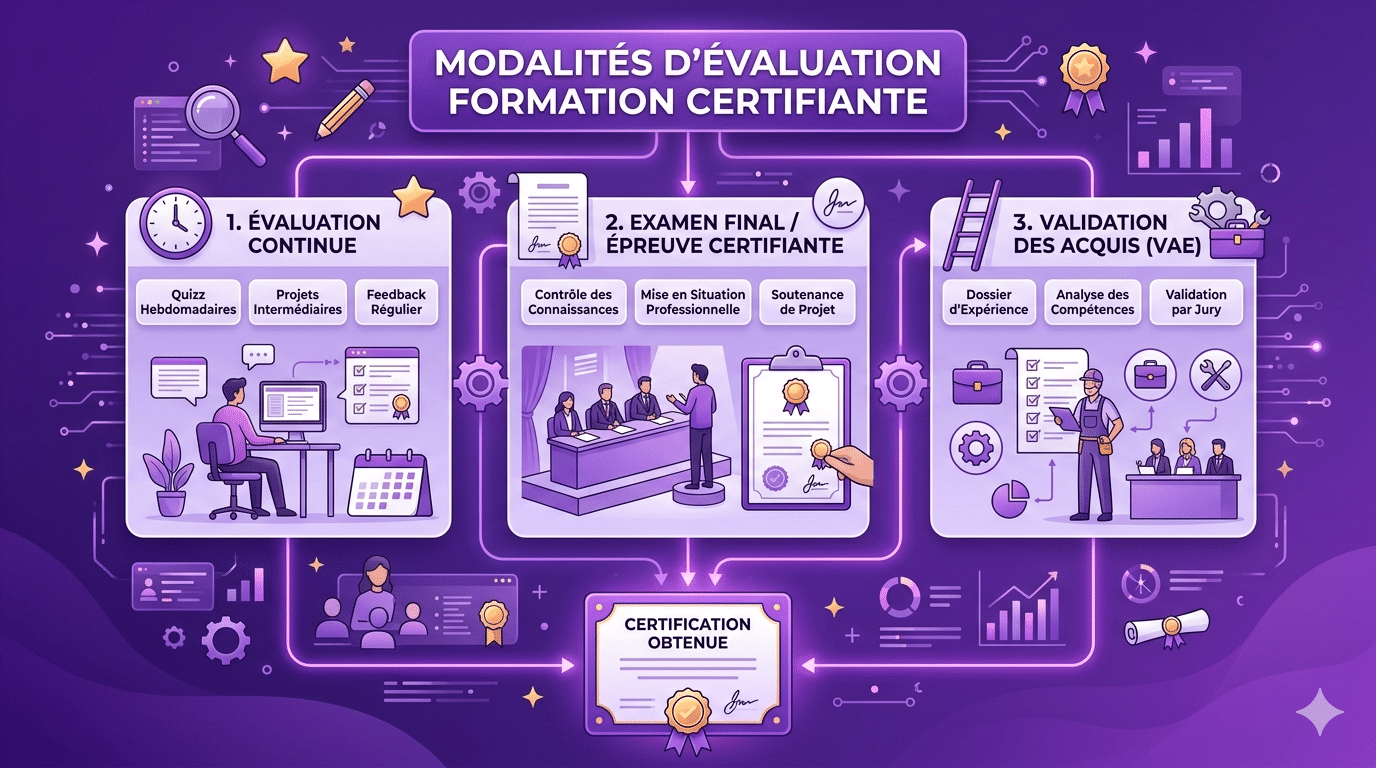

I – CONTINUOUS ASSESSMENT (30%)
Knowledge and techniques are assessed continuously, so that each participant’s learning can be evaluated carefully:
– Knowledge is checked through multiple-choice questionnaires.
– The learning of massage techniques is checked through an assessment of the participant by the trainer.
At the end of each module, the trainers meet to gather all the assessments and review the knowledge and skills acquired by every participant.
These assessment results are recorded on a liaison sheet for internal use by the training organisation, so that they are properly shared between the different trainers.
At the end of this meeting, if needed, a meeting may be arranged with any participant whose module was not satisfactory, in order to set up an action plan suited to their needs.
II – THE DISSERTATION (20%)
Each participant will be asked to write a dissertation of about 30 pages on:
– their motivation for choosing this training,
– their expectations of the current training,
– the path that led them to this training,
– what changes in them as they discover this profession.
It is to be handed in at the second-to-last module of the training.
III – LOG OF MASSAGES GIVEN OUTSIDE THE TRAINING (10%)
Each participant will be asked to record all the massages they give between training sessions (date, first name of the person massaged, testimonial if possible).
The aim is to put into practice everything learned during the training modules.
IV – ASSESSMENT OF BEHAVIOUR (10%)
The participant’s behaviour is assessed throughout the training.
The following are taken into account:
– their ability to follow the rules,
– their behaviour within the group,
– their ability to adapt and to listen,
– their ability to respect others and their limits, and to have their own limits accepted,
– their punctuality and hygiene.
V – PRACTICAL EXAM IN A REAL SITUATION (30%)
A practical exam in a real situation takes place during the last training module.
During this exam, the following are assessed:
– setting up the workspace,
– hygiene,
– welcoming the client,
– the anamnesis (recognising the client’s needs and any issues that rule out a massage session, and defining a protocol that sets the framework of the massage),
– support and connection protocols,
– the massage techniques used,
– the protocols during the massage,
– support in the present moment after the massage,
– active, caring listening to the client’s feedback.
The final exam takes place before a panel of professionals.
Our pages workshops, training courses, massages and treatments
Find us also on the following media, social networks, books and websites
Book
Well-being directories
- Résalib – practitioner in Aveyron
- Guide Tantrique – our massages
- Guide Tantrique – our workshops
- Le Guide du Bien-être – our estate
- Amedcine – massages and treatments
- Annuaire des Thérapeutes – massages and treatments
- BeautePresta directory – our services
- Éveil & Sens on Bio et Bien-être
Tourism & Discovery
- Aveyron Tourist Office – our establishment
- TripAdvisor – Éveil & Sens
- Google Maps – for our services
Listings
- Le Petit Futé – our massages and treatments
- Le Petit Futé – the Ô Cèdre Bleu estate
- Yelp – massages and treatments
- Yelp – our Ô Cèdre Bleu estate
- Pages Jaunes – Éveil & Sens
Do you read us often? Tell Google
Add Éveil & Sens to my sources