Non-Duality
Tantra and philosophy: non-duality.
Here is an expression that often comes up in the field of personal development, and especially in the world of Tantra.
In my view, to explain clearly what non-duality is, we must start by listing everything that has created duality along our life path.
In religion
I come from a family with a Christian background, so I will only talk about what I know best, but we can find the same thing in other religious upbringings.
Good is opposed to evil, a value imposed by religious institutions. If you behave well, you go to heaven, and if you do wrong, you go to hell.
We could list what was passed on to us (but the list would be very long); here are a few examples:
- Procreation is good,
- Sex is bad (in the sense of pleasure),
- Gluttony is bad,
- ….
Let me share a conversation I once had on a train with a seminarian (a future priest). He was sitting opposite me and staring at me. His gaze went from the cover of my book (from the movement of his eyes, you could tell he was reading the title) to my face.
The book was "The Art of Sexual Ecstasy: The Path of Sacred Sexuality for Western Lovers" by Margot Anand.
I had also noticed that each time his eyes went back and forth, he made small movements, as if he wanted to start a conversation without finding the way or the courage. In the end, this lasted a good 20 minutes.
After that, I marked my page, put the book on my lap and looked at him, starting the conversation by telling him I had noticed that my book seemed to interest him.
A long conversation followed about who he was and who I was, his faith and mine, the book, and of course Tantra, of which he knew very little. Then, to come back to what interests us here, "non-duality", here are his words and my last question on the subject:
"…
- The priest: God is good and the Devil is evil! There are inevitably 2 opposites in religion, as in life!
- Me: But who created the Devil? He was indeed a son of God, a fallen archangel who lived in Paradise before ending up in hell, wasn't he?
So if God is good, why did he give rise to evil?
…"To this question of mine, no clear answer from him!
In short, even religion is troubled by non-duality.
Still, what emerges from religion is that the notion of pleasure is absent, and would be seen as "not good".
In society
I am going to take an example very far from personal development, on purpose, to show that duality is everywhere around us.
Society is governed by a myriad of laws telling us what we are allowed to do and under what conditions.
Let's take an example:
- I can become the owner of the house of my dreams and have it built. It is allowed!
I can, if I submit a building permit that complies with the planning rules of the place where I want to build. - I want a house with rounded windows and I would like blue render (for example)!
The rule is that I must have square windows and light-coloured render.
Goodbye to my dream: I have to fit the norm if I want my house! Perhaps your dream lies elsewhere? If you truly hold on to it, it will come true.
And we could take the case of cars, freedom of expression, job hunting, …. You have to fit into the boxes and learn to forget or adjust your dreams.
In the family
The first time we encounter duality is within our family, yes indeed!
I will just give a few examples:
- If you want your dessert, finish your plate first!
(I don't like cauliflower and you still make it every time!) - Don't touch your willy, it's naughty!
(and yet it feels nice!) - If you want to leave the table, ask permission!
- If you want a slice of bread and jam for your snack, put the shopping away first!
(I wanted to do it afterwards!) - You will be a doctor, my son! You'll get nowhere with mechanics!
(my mechanic is living proof that you will!)
In every case:
First, we must live up to what our family expects of us and adopt its values.
Then, a religious system lays down rules we must respect, and we must do good.
Finally, we have to live in a normative society that governs every facet of our daily life.
And where are we in all this? Our desires, our aspirations, our needs: where are they?
Yet at birth, we are all Tantric beings who know nothing of duality!
Indeed, free of all these rules, regulations and expectations, we were innocent then.
So, after looking at all these cases, what is "non-duality"?
It is finding again the little girl or little boy inside each of us, who didn't care at all about what was expected of them, or about what was good or not good to do!
It also means knowing how to welcome everything that comes to us, good and bad alike.
We belong to no one; our body is ours alone, our sacred temple. Our sensations, our desires and our needs concern only us.
The child discovering their body
A young child explores their body and notices that touching it feels nice, so they carry on exploring.
Here, it means welcoming the idea that "if it is good for me, then I do it"! Without judging it as something not done, not good, a sin, and so on. Do you want it? Is it good for you? Welcome it, do it with presence, and know how to draw the best from it.
The child learning to walk
Although the movements of walking are not yet mastered, the child feels the pleasure of being able to move around. And of course, they eventually fall. They are surprised, cry, then get back up and are joyful again at being able to move.
For adults, a fall can be compared to a failure (at work, in a relationship, in DIY, in cooking, and so on).
Here, it means welcoming the fall as a life experience, not as a failure!
Then go and meet the emotion, fear, frustration or negative feelings it sends you. Understand and welcome the reason why, and file it under experience. That way, you can keep moving forward. We fall, of course! But we also get back up! And we become stronger!
The child marvelling at a flower
And who brings it to you, overflowing with joy.
This is about still knowing how to marvel at the simple things around us, here a flower. Yes, it's a flower, fine, so what? You might answer me that.
But this flower: have you taken the time to look at it carefully? What colour is it? What are the shape and number of its petals, and how soft are they? What are its stamens like? And its scent, is it gentle? Where did you find it?
So take the time to discover or rediscover it. For each sense you use in this discovery, connect it with the memory it evokes.
For example: the scent of a daffodil or narcissus (they are in bloom in my garden right now). What does it make you think of? Perhaps it reminds you of the smell of your grandparents' garden when you spent your holidays there?
Take the time you need to be present. And it is quite likely that, in doing so, a smile will light up your face!
Non-duality is all of this
It is knowing how to welcome what is good for you and what is not, with the same attention.
Not living in fear of the judgement of society (in the case of the flower, of looking like a gentle eccentric), of your family (who think you could have tidied the garage instead of wasting time on that), or of your ego (yes, it is always there; we need it to live and protect ourselves, but it is also good to give it time off now and then).
Would you like to explore non-duality in a workshop or with personal support? Let's talk about it together.
It is not a miracle recipe! And I certainly do not hold (oh no!) the divine word!
But if you take the time to welcome all this within you (the good and the bad), to do it with presence (we say consciously) and without judgement of yourself or others, then you will see many things change in your life, starting with your relationship with yourself!
With love,
Stéphane.
Non-duality : your frequently asked questions
It is finding again the little girl or little boy inside each of us, and knowing how to welcome everything that comes to us, good and bad alike, with the same attention.
It comes from what has been passed on to us: religious rules that set good against evil, the laws of a normative society and our family's expectations.
By welcoming what is good for you and what is not with the same attention, by welcoming a fall as a life experience rather than a failure, and by still knowing how to marvel at simple things.
It is about not living in fear of the judgement of society, your family or your ego. The ego remains necessary to live and protect yourself, but it is good to give it time off now and then.
About the author
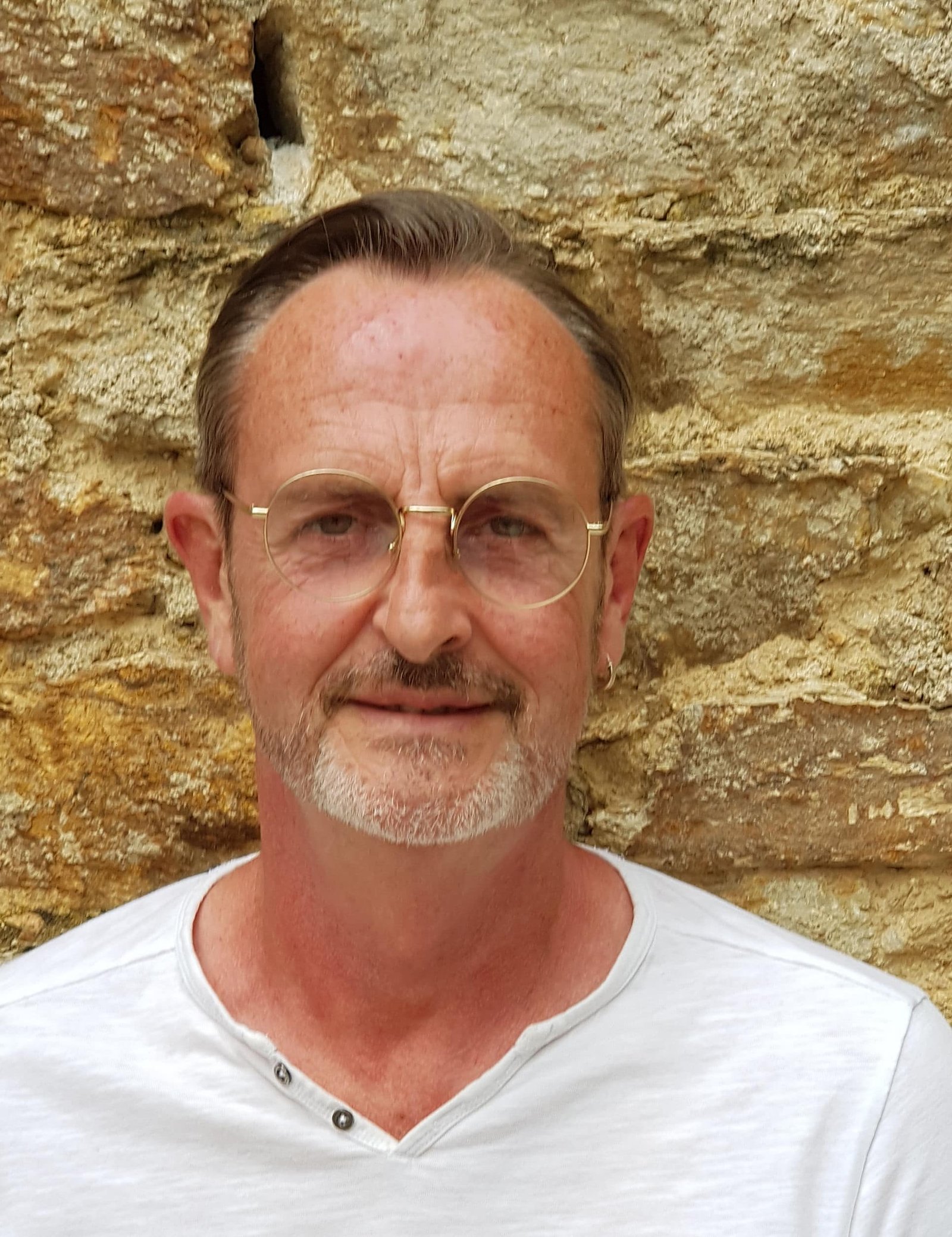
Stéphane
Founder of Éveil & Sens in 2008
Tantric initiator, emotional coach, certified massage trainer. Stéphane founded Éveil & Sens in 2008 and has since been supporting people seeking meaning and personal rebuilding.
Find us also in the following media, social networks, books and websites
Book
Well-being directories
- Résalib - practitioner in Aveyron
- Guide Tantrique - our massages
- Guide Tantrique - our workshops
- Le Guide du Bien-être - our estate
- Amedcine - massages and treatments
- Annuaire des Thérapeutes - massages and treatments
Tourism & Discovery
- Aveyron Tourist Office - our establishment
- TripAdvisor - Éveil & Sens
- Google Maps - for our services
Listings
- Le Petit Futé - our massages and treatments
- Le Petit Futé - the domaine Ô Cèdre Bleu
- Yelp - massages and treatments
- Yelp - our domaine Ô Cèdre Bleu
- Pages Jaunes - Éveil & Sens
Do you read us often? Tell Google
Add Éveil & Sens to my sources